

What operating model can reduce infrastructure risk and strengthen accountability?
- Coevolve
As enterprise infrastructure becomes more complex, managing risk effectively is no longer just a technology challenge. For modern enterprises, a combination of multiple vendors, platforms, internal teams, and external providers can make it difficult to know who owns what, where operational gaps exist, and whether processes are consistently delivering the desired outcomes.
This complexity creates a key challenge for IT leaders: how can infrastructure remain resilient, responsive, and well-governed without giving up control?
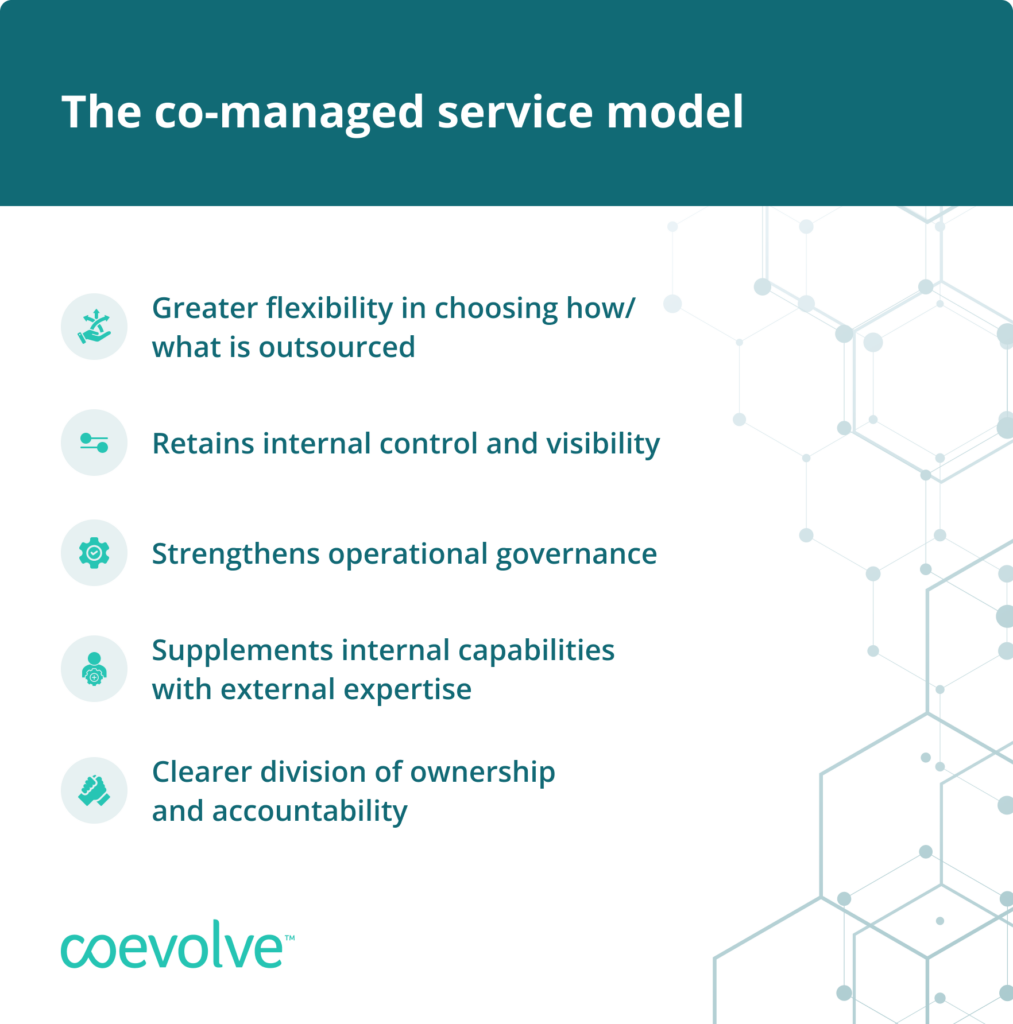
For many organizations, a co-managed service model can provide this robust structure. The co-managed model combines internal control with external expertise, establishing clearer governance around the infrastructure while retaining organizational autonomy.
What are the advantages of partnering with co-managed service providers?
The primary advantage of a co-managed model is that it gives organizations greater flexibility over how their infrastructure is managed. Rather than outsourcing the entire network, internal teams can retain responsibility for the areas they want to control while a specialist provider supports agreed areas of the environment.
As Coevolve explains in its guide to managed and co-managed services, co-managed services can supplement internal network management with capabilities such as complex changes, after-hours support, and additional resources during periods of increased demand.
This focus on the operating model is increasingly important. Gartner reports that 71% of CEOs believe their IT operating models are not fit for the age of AI, highlighting the growing challenge of governing technology that is increasingly distributed across teams and environments.
Further, as AI, cloud services, and modern networking architectures continue to increase operational complexity, organizations need operating models that can scale alongside their technology environments.
How do co-managed network service partnerships improve business agility?
Business agility in the digital age depends on more than having modern infrastructure in place. When responsibilities and designations are unclear, IT teams can spend valuable time determining who owns an issue, coordinating between providers, or resolving operational gaps, leading to productivity and performance gaps.
A co-managed network service partnership can fill these gaps by creating a clearer structure for ownership, escalation, and decision-making. With strong operational processes and governance structures in place, organizations can reduce delays, streamline decision-making, and respond more effectively to changing business requirements. Rather than spending valuable time coordinating between various teams and providers, internal resources can instead focus on delivering measurable business outcomes.
Coevolve’s insights on co-managed networks similarly positions co-management as a combination of internal control and visibility with the expertise of managed services. Further, McKinsey & Co. research reinforces the importance of this operating-model approach, noting that growing infrastructure complexity and demand can increase the risk of failure. In contrast, a well-designed infrastructure operating model can improve resilience, productivity, and time-to-market.
Why does clear governance matter in complex infrastructure environments?
As the number of technologies and service providers increases, management becomes more difficult to coordinate. Governance gaps can emerge between teams, providers, and operational processes, increasing infrastructure risk.
For example, an internal IT team may assume a provider is managing an issue, while the provider assumes it sits with another vendor. As a result, problems can take longer to resolve. Without clearly defined ownership, operational risks can remain hidden.
A co-managed operating model helps address this risk by creating a shared governance framework between the organization and service provider. Responsibilities, decision rights, escalation paths, and service outcomes are clearly defined, enabling organizations to retain control of strategic priorities while ensuring that they benefit from additional operational expertise.
The objective is not simply to define ownership, but to ensure both parties can work together effectively to support business outcomes moving forward.
Overall, clear accountability gives IT leaders greater confidence that infrastructure risks are being proactively managed, rather than simply addressed, when they become business-impacting.
What should IT leaders look for in a co-managed service provider?
Choosing a co-managed partner to work with must involve more than merely assessing technical capabilities. The right provider should strengthen your operating model, help you manage complexity, reduce risk, and maintain control as infrastructure environments evolve.
IT leaders should look for a partner that can provide:
- Operational expertise across increasingly complex network, cloud, and security environments.
- Clear governance frameworks that support effective decision-making and collaboration.
- Proactive identification and mitigation of operational risks.
- Consistent service delivery across multiple technologies, platforms, and providers.
- Visibility into infrastructure performance, service outcomes, and emerging issues.
- The flexibility to evolve alongside changing business priorities and technology requirements.
A co-managed partnership does more than provide additional resources. A strong and sustained co-managed partnership helps organizations improve operational maturity, strengthen resilience, and ensure infrastructure remains aligned to business objectives, both now and in the future.
Building a more resilient infrastructure operating model
As infrastructure environments become more complex, resilience depends on more than internal technology itself. IT leaders also need confidence that responsibilities are clear, risks are visible, and operational processes continue to deliver the desired outcomes over time.
A co-managed service model can provide this much-needed structure by combining internal knowledge and control with external expertise, governance, and operational support.
Ultimately, strong governance can be the difference between simply reacting to infrastructure risk and proactively managing it. For organizations navigating increasingly complex network environments today, this approach offers the operational foundation needed to remain resilient, responsive, and agile in the face of future disruption.