

Driving manufacturing growth with connectivity
Who is this report for?
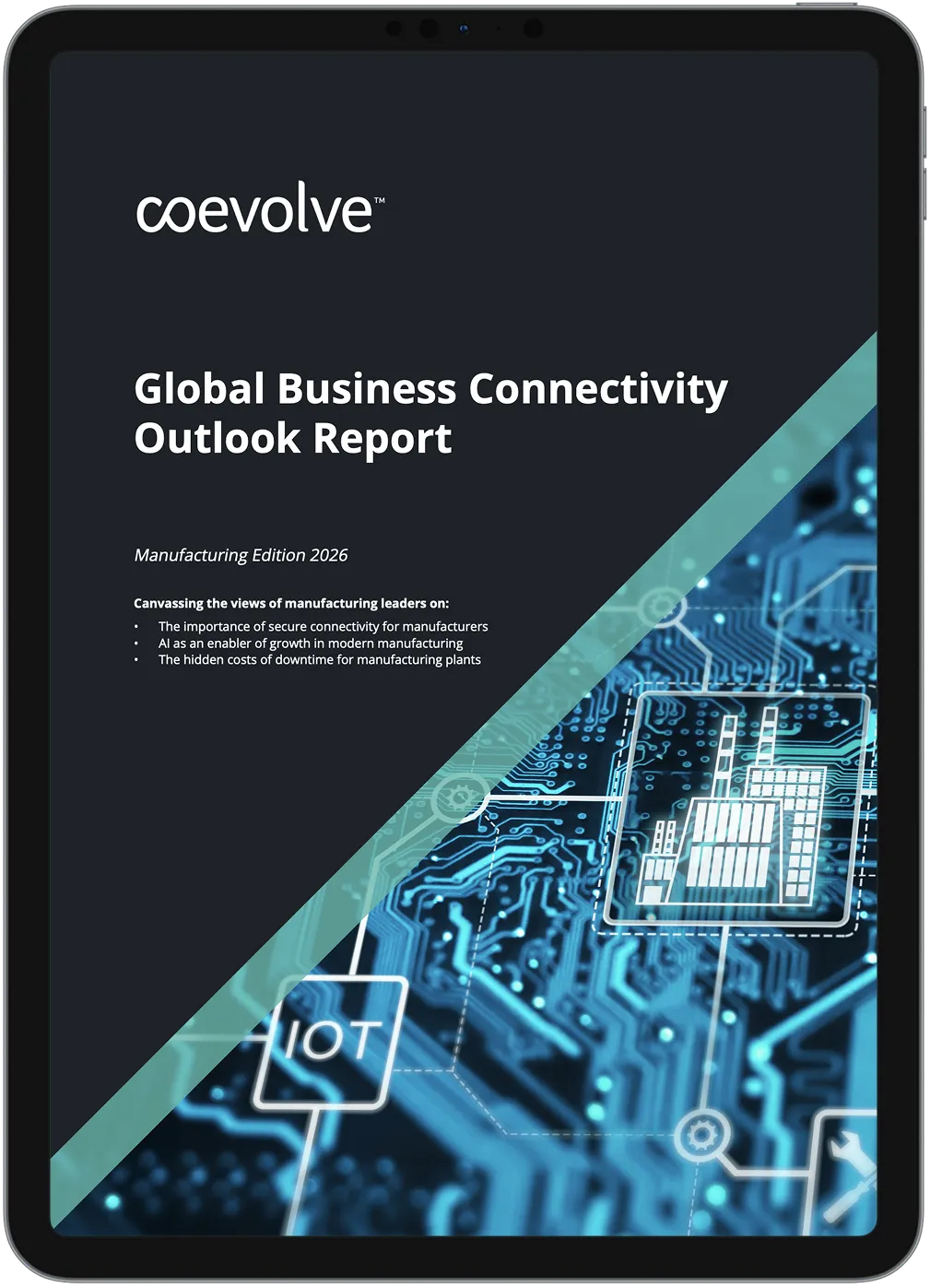
Manufacturing leaders who want to know what their peers are thinking about the safe, effective integration of AI and other innovations into production environments.
If you’re a manufacturer experiencing these challenges:
- Current infrastructure that’s holding AI and automation efforts back
- Challenges in integrating legacy systems with today’s AI and cloud innovations
- Lack of confidence in your cyber resilience, OEE continuity, or supply chain security
In this industry report, you’ll find solutions:
- How secure connectivity can anchor innovation and future-proof your manufacturing operations
- How manufacturing leaders should be approaching AI to set themselves up for success
- How to effectively manage and mitigate the elevated risks that AI and other innovations can create
Request download

The big idea: secure connectivity is key to enhance AI performance
“In resilient environments, AI enhances performance. In more fragmented contexts, AI amplifies poor performance and risk exposure. As such, the pace of AI adoption is raising the stakes on getting the connectivity layers right for both network and security.”
FAQs
Why is AI deployment not enough to drive manufacturing growth?
Besides the operational question of what kind of AI to deploy, where to deploy it, and what it should be for, the implementation of AI brings elevated risks. This is due to the distributed nature of data, access to the sensitive data needed for operational automation and control, and how all that data moves in and out of your network environment. These complexities leave your data open to attack, theft, or corruption, with attendant disruptive effects on your operations. Deploying AI alone isn’t enough to drive business growth for manufacturers. Enterprises must ensure networks can keep AI operations safe, secure, and undisrupted.
How should manufacturing leaders approach AI innovation risk within their organizations?
Manufacturing leaders should approach the risks associated with AI innovation not as a technological issue, but as a business and operational one. AI implementation goes beyond the IT team and encompasses multiple stakeholders, from operations and engineering to risk, compliance, and legal experts. As AI becomes increasingly embedded in manufacturing operations, AI now touches multiple locations and business functions for today’s companies. This means that manufacturing leaders must embed cross-functional governance in decision-making about AI, innovation, and risk. A holistic view of AI innovation is key to success.